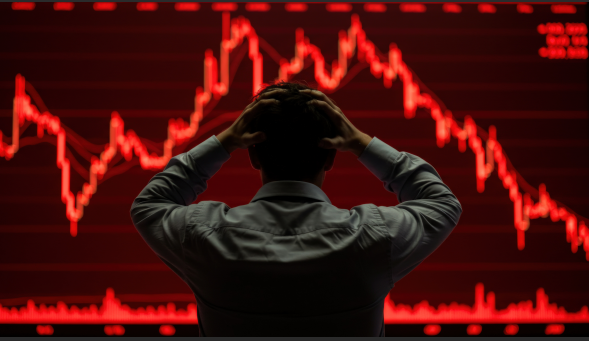
Why Is Crypto Down Today? Why is crypto crashing?
Wondering why crypto is down today? Explore key reasons behind crypto market crashes, market trends, and how crypto trading signals can help traders.

Top Reasons Behind the Crypto Market Crash
The cryptocurrency market is known for its volatility, and sudden price drops can leave investors wondering what is happening. If you are searching for why is crypto down today, the answer usually involves a combination of market sentiment, economic conditions, investor activity, and trading decisions.
Recent crypto market weakness has been associated with rising US Treasury yields, higher oil prices, a stronger US dollar, and liquidations of leveraged positions. These factors can reduce demand for riskier assets, including Bitcoin and other cryptocurrencies. Recent market reports have highlighted how these pressures can contribute to sharp market movements.
Understanding the reasons behind a market decline can help traders make more informed decisions rather than reacting emotionally to falling prices.
Why Is Crypto Down Today?
There is rarely just one reason behind a cryptocurrency market decline. Prices are influenced by global economic developments, investor confidence, trading volume, and activity in the derivatives market.
Here are some important factors that can explain why cryptocurrency prices are falling.
1. Rising Interest Rates and Economic Uncertainty
Economic conditions play an important role in cryptocurrency prices. When investors expect interest rates to remain high, traditional investments such as government bonds may become more attractive compared with riskier assets.
Cryptocurrencies like Bitcoin and Ethereum can face selling pressure when investors reduce their exposure to volatile investments. Inflation concerns, central bank decisions, and economic uncertainty can also influence market sentiment.
Traders should therefore monitor major economic announcements and understand how they may affect demand for digital assets.
2. Large Investors Selling Their Holdings
Large cryptocurrency holders, often called whales, can influence short-term market movements through substantial buying or selling activity.
When large holders sell significant amounts of Bitcoin or other cryptocurrencies, prices may decline if buying demand is insufficient to absorb the additional supply. Such movements can also encourage smaller traders to sell their holdings.
However, a price decline alone does not prove that whales are selling. Traders should review credible on-chain data and trading-volume information before drawing conclusions.
3. Liquidations in the Crypto Market
Leverage allows traders to control larger positions with a smaller amount of capital. Although this can increase potential returns, it also increases risk.
When prices move against leveraged traders, exchanges may automatically close their positions through liquidation. These forced transactions can add further selling pressure and accelerate a market decline.
Liquidations are one reason a relatively small price movement can sometimes turn into a much sharper drop across multiple cryptocurrencies.
4. Bitcoin's Influence on Altcoins
Bitcoin is the largest cryptocurrency by market value and often influences the direction of the wider crypto market.
When Bitcoin falls sharply, investor confidence may weaken across the market. Ethereum and other altcoins can experience even larger percentage declines because they may be more sensitive to changes in liquidity and risk appetite.
Nevertheless, individual cryptocurrencies can perform differently depending on their technology, adoption, token supply, and project-specific news.
Why Is Crypto Crashing? Understanding Market Sentiment
People searching for why is crypto crashing often want to know whether falling prices represent a temporary correction or the beginning of a longer downturn.
A correction generally refers to a meaningful decline following a period of rising prices. A bear market is a more prolonged period of weakness, often accompanied by declining prices and negative investor sentiment.
Several indicators can help traders evaluate market conditions:
- Trading volume: Higher selling volume may indicate stronger selling pressure.
- Support levels: Traders watch price areas where buying demand has previously emerged.
- Market sentiment: Fear and uncertainty can lead investors to reduce their exposure.
- Bitcoin dominance: Changes in Bitcoin's share of total crypto market value may reveal shifts in relative market performance.
- Economic news: Inflation data, interest-rate expectations, and geopolitical developments can influence risk appetite.
No single indicator can reliably predict the market's next move. Combining different sources of information provides a more balanced perspective.
Can Crypto Trading Signals Help During a Market Crash?
During volatile market conditions, some traders use crypto trading signals to identify potential trading opportunities. These signals typically provide information such as a possible entry price, profit targets, stop-loss levels, and the direction of a potential trade.
Signals may be based on technical indicators, chart patterns, market news, or a combination of analytical methods.
However, crypto trading signals are not guarantees of profit. Market conditions can change quickly, and even a well-researched signal can result in a loss.
Before acting on any signal, traders should:
- Check the reasoning behind the recommendation.
- Evaluate the proposed entry, exit, and stop-loss levels.
- Consider trading fees and potential slippage.
- Avoid risking money they cannot afford to lose.
- Verify the provider's historical performance rather than relying on profit screenshots.
Risk management remains essential, particularly during sudden price movements.
How Shenron Global Can Help Traders
At Shenron Global, we believe that informed decisions and effective risk management are essential in the volatile cryptocurrency market. Whether you are exploring crypto trading signals, analysing market trends, or learning about copy trading, understanding market movements can help you make more informed trading decisions. Before following any trading strategy, always conduct your own research and carefully evaluate the risks involved.
Are Crypto Trading Signals Telegram Groups Reliable?
Many traders search for crypto trading signals Telegram groups because messaging platforms make it easy to receive market updates and trading ideas.
Some groups share technical analysis, educational content, and market commentary. Others may publish unverified performance claims or encourage risky trades.
Before joining a group, check whether the provider explains its analysis, discloses risks, and maintains a transparent record of previous calls. Be cautious of guaranteed returns, pressure to deposit funds, requests for wallet seed phrases, or demands to send cryptocurrency directly to an administrator.
A Telegram group's popularity does not automatically establish its credibility. Always conduct independent research before following a recommendation.
How to Find the Best Crypto Trading Signals
Choosing the best crypto trading signals requires more than looking at advertised profits. Traders should focus on transparency, consistency, risk management, and the quality of the analysis.
Look for providers that explain their trading strategy, publish clear entry and exit levels, and acknowledge losing trades. Check whether their performance claims can be independently verified and whether their recommendations match your experience and risk tolerance.
It is also important to understand the difference between educational market analysis and personalized financial advice. A signal is an input for research, not a substitute for your own judgment.
New traders should consider learning basic technical analysis and practising with a demo account before risking real money.
Conclusion
So, why is crypto down today? Cryptocurrency prices can decline because of economic uncertainty, rising bond yields, selling pressure, leveraged liquidations, and weakening investor confidence. The specific reasons can change from one trading session to another, making it important to check current market data and reliable news sources.
Understanding market trends and using risk-management techniques can help traders navigate volatility more carefully. Crypto trading signals may provide additional analytical insights, but no provider can guarantee profits or predict every market movement.
For more informed trading decisions, combine independent research, market analysis, and disciplined risk management rather than relying on a single indicator or signal provider.
Disclaimer: This article is for educational and informational purposes only. Cryptocurrency trading involves substantial risk, and you could lose some or all of your invested capital. Always conduct your own research before making financial decisions.
Frequently Asked Questions
What is a crypto crash?
A crypto crash is a sudden and significant decline in cryptocurrency prices across the market.
Why does the crypto market crash?
The crypto market can crash due to regulatory changes, economic uncertainty, market panic, and large-scale selling.
Can cryptocurrency prices recover after a crash?
Yes, cryptocurrency prices can recover, but recovery is not guaranteed and depends on market conditions.
How can investors manage risk during a crypto crash?
Investors can manage risk through diversification, position sizing, stop-loss orders, and avoiding emotional trading.
Is it safe to buy cryptocurrency during a market crash?
Buying during a crypto crash carries significant risk. Investors should research market conditions and consider their risk tolerance before investing.